Unmanned ground vehicles
Compact UGV concepts for rough terrain, remote sensing, logistics and hazardous tasks. Mobility and payload are designed together.
 Start a project
 UK unmanned ground vehicle (UGV) design and robotics integration in Lincolnshire, with aerial, surface and subterranean engineering for defined projects.
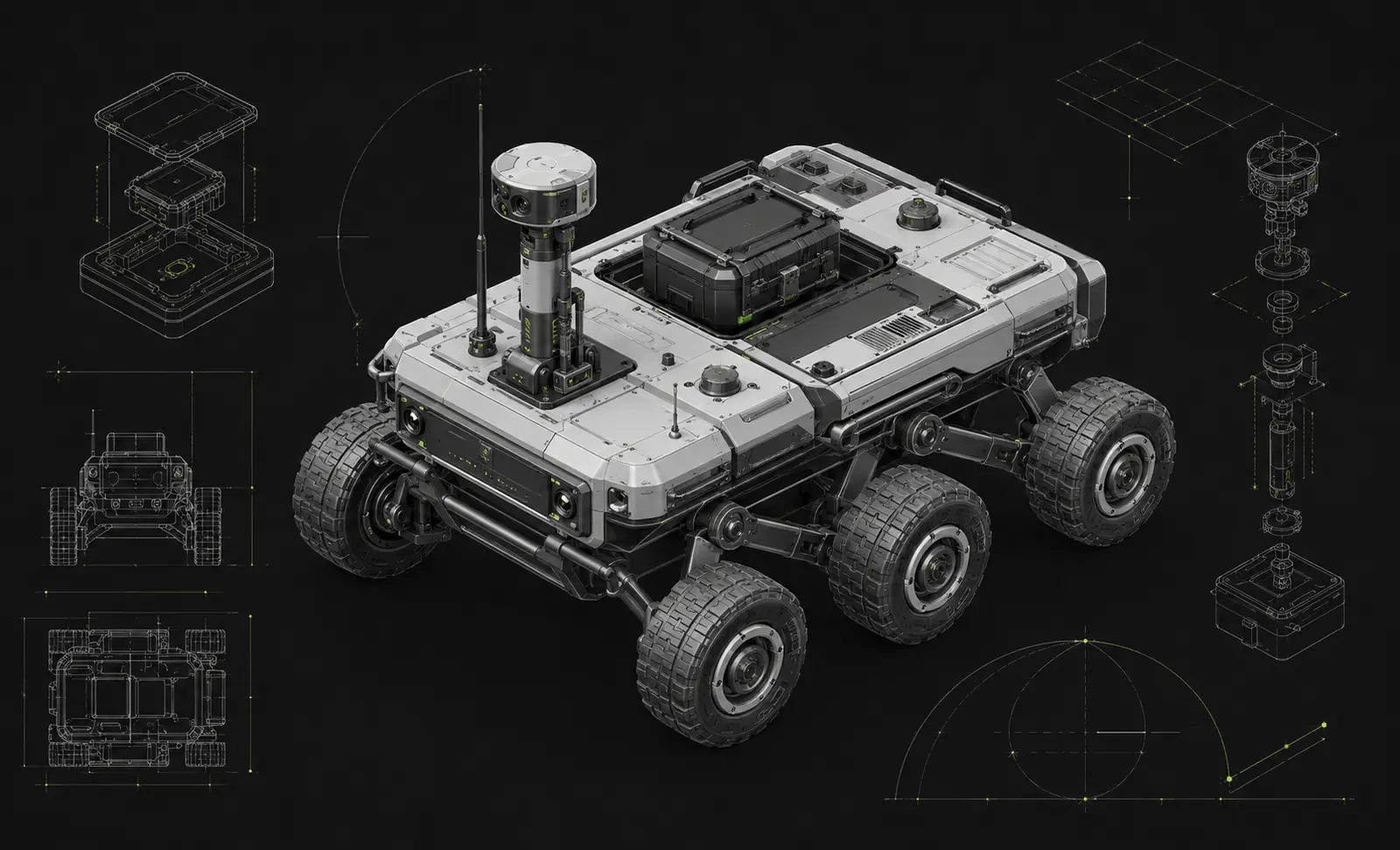
RCDEN is designing and developing unmanned ground vehicles (UGVs) in the UK. We start with the task, terrain, payload and operator. We then shape the platform around those needs.
Unmanned systems are often grouped by where they move. The engineering problem is wider. A useful system must carry the right payload, manage its power, move data, support the operator and remain maintainable.
A useful brief describes the task before choosing the vehicle. Start with the payload it must carry, the ground it must cross and how the operator will control and recover it. Endurance and radio range need operating conditions attached to them; an unloaded demonstration does not establish performance with a working payload.
These inputs connect the vehicle to its payload interfaces, ground control software and development trials. RCDEN’s platforms are in development. Availability and demonstrated performance are established for the agreed project stage.
RCDEN’s present focus is modular unmanned ground systems. The same engineering method can extend to surface, aerial and subterranean projects where the requirement and available evidence justify it.
Compact UGV concepts for rough terrain, remote sensing, logistics and hazardous tasks. Mobility and payload are designed together.
USV concepts and integration work connecting propulsion, sensing, communications and remote mission control.
UAS design and integration for specialist payloads, flight software and clear operator workflows.
Low-profile robotic concepts for inspection, mapping and work in confined or hazardous spaces.
The vehicle is only one part of the capability. We consider mobility, structure, power, payload, communications, software and support as one architecture. That reduces late integration problems and gives each design decision a clear reason.
Practical open standards can shorten integration time and reduce lock-in. RCDEN can work with technologies such as ArduPilot, MAVLink, QGroundControl and ROS 2 where they fit the requirement. Customer interfaces and security constraints still govern the final design.
The design aim is a modular platform that can accommodate changing payloads, software and operating needs. Compatibility and performance would need to be demonstrated through integration and trials.
We can support the full route or a defined part of it. Work may start with a difficult requirement, an existing platform or a payload that needs a vehicle. Each stage should produce something useful: a decision, an interface, a prototype, a test result or a controlled design update.
Yes. Work can start with a customer's vehicle or payload. We assess mounting space, mass, power, communications and operator controls before defining the integration. Our robotic payload integration service covers these interfaces together.
Aerial-system engineering is available for defined projects involving specialist payloads, flight software and operator workflows. Our main platform focus is unmanned ground vehicles. The aircraft, intended use and integration evidence determine the scope we can support.
We will help define a practical route from the operating need to a testable robotic capability.
Contact RCDEN