Define
Capture the mission, operator, environment, risk and outcome.
 Start a project
 UK robotics development, rapid prototyping, systems integration and practical trials for defence, industrial and hazardous-environment applications.
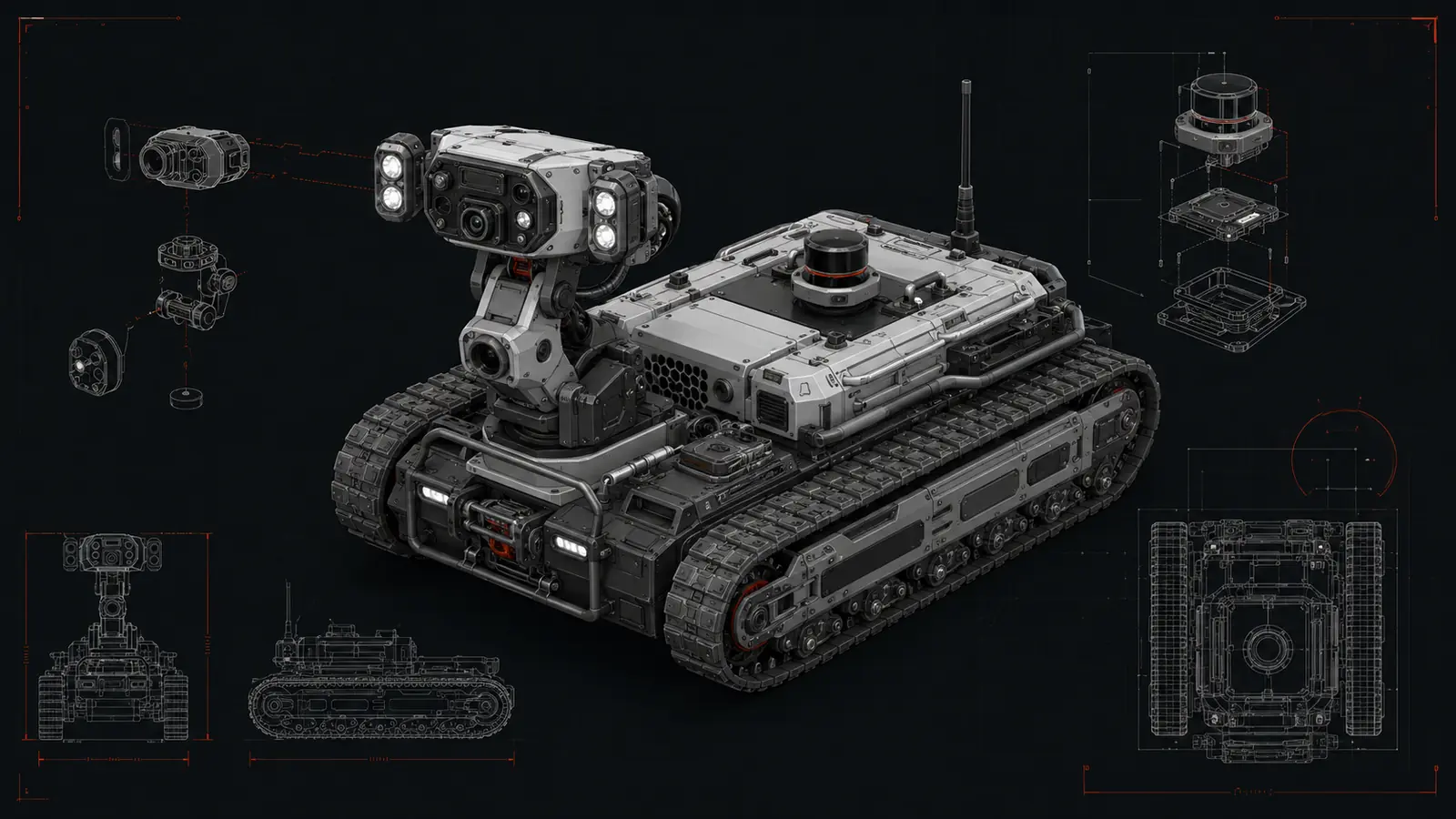
RCDEN brings mechanical, electrical and software development into one practical build-and-test loop. Each stage is used to remove uncertainty.
A strong robotics project starts with the operating need. We identify the user, environment, hazards, interfaces and evidence required. That creates a baseline the design can be tested against.
Early decisions stay visible. When a requirement changes, the impact on power, structure, control, payload and trial evidence can be traced.
Capture the mission, operator, environment, risk and outcome.
Set the interfaces between mobility, payload, power and control.
Build enough of the system to test the highest-risk assumptions.
Measure the result, record evidence and feed learning back in.
This joined approach shortens the distance between finding a problem and fixing it. The engineer who sees the trial result can work directly with the hardware and software that produced it.
A prototype is most useful when it has a clear purpose. It may test traction, endurance, radio coverage, operator workload or payload performance. The build should expose the next decision, not hide it behind polish.
As confidence grows, configuration and evidence become more controlled. The aim is to progress from an early concept to a prototype suitable for defined trials.
A successful trial is not only a demonstration. It records conditions, expected results, actual results and faults. It also captures the decisions that follow. This gives customers a basis for acceptance, improvement or the next phase of work.
Yes. We can begin with requirements, a mechanical design or a partly integrated system. The first step is to establish the current design, interfaces and the question the next build or trial must answer. This helps define a useful scope before committing to further fabrication.
Record the configuration tested, conditions, expected results, actual results and any faults or limitations. Agree acceptance criteria before the trial. Evidence can then support a design decision or the next phase of development without treating a demonstration as certification.
A development trial needs a specific question and a repeatable way to answer it. State the hardware and software revision, fitted payload, operating conditions, operator actions and expected outcome. Include the stop conditions and the person responsible for authorising the test.
Record the result against those conditions, including faults and tests that could not be completed. A pass applies to the configuration and scope actually tested. A changed payload, radio or software version may need further assessment before the earlier result can be reused. This is how the trial evidence supports the next engineering decision.
We will help define a practical route from the operating need to a testable robotic capability.
Contact RCDEN