Mechanical integration
Mounting, protection, field of view, vibration, access and weight distribution designed into the platform.
 Start a project
 Robotic payload and sensor integration for unmanned systems, covering cameras, specialist sensors, communications, embedded AI and control software.
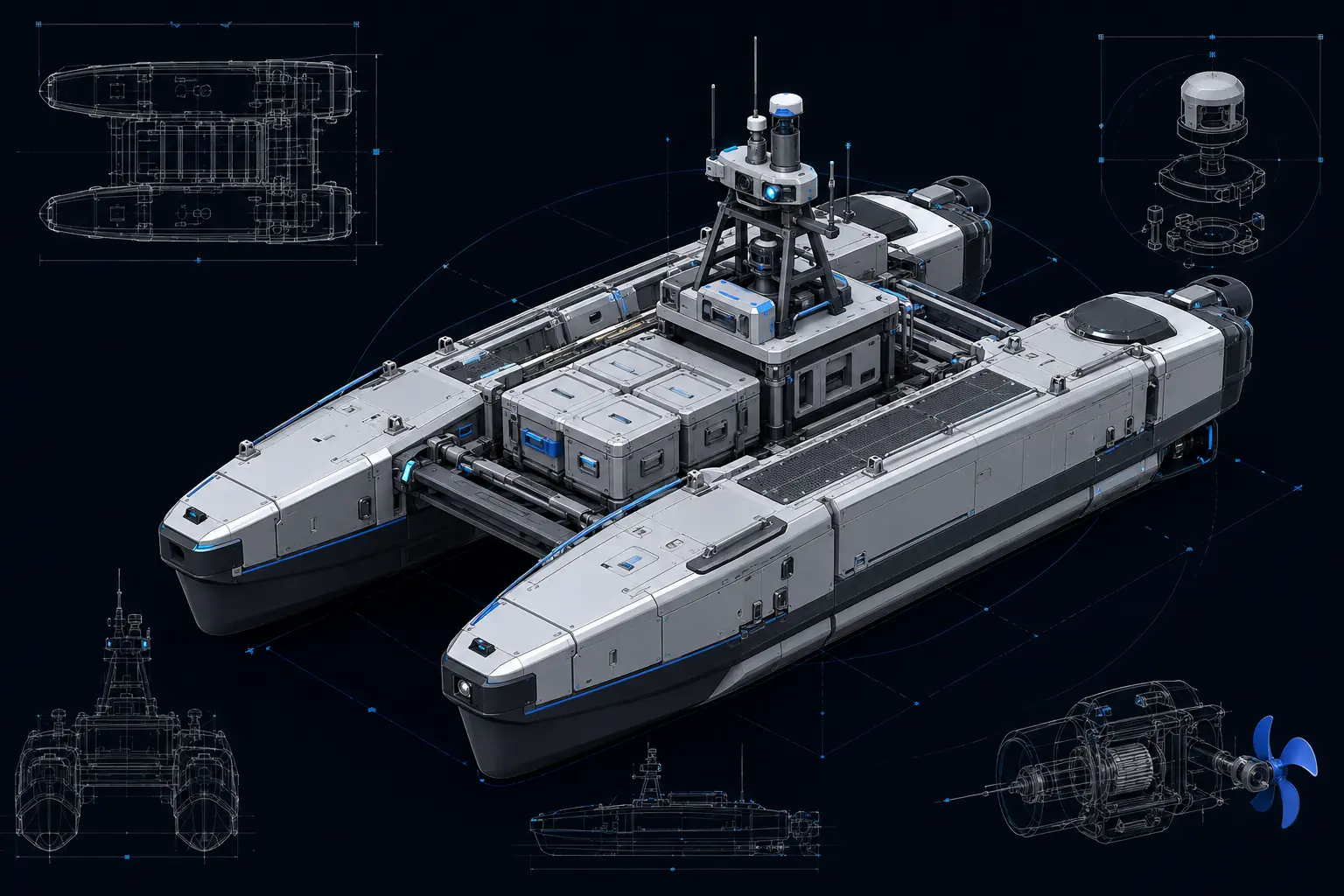
A payload becomes useful when the platform can power it, carry it, control it and deliver its data. RCDEN integrates those parts as one system.
The right payload begins with the job. The system may need to see, measure, map, sample, inspect, move or communicate. That outcome sets the sensor, position, power, bandwidth and control needs.
We can integrate a customer-selected payload or help define the interface around a new one. The work covers the mechanical, electrical and software boundaries that determine whether it performs reliably.
Mounting, protection, field of view, vibration, access and weight distribution designed into the platform.
Power quality, connectors, switching, protection and thermal needs defined and tested.
Commands, telemetry, video, events and operator controls brought into the mission workflow.
The list is not a fixed catalogue. The platform and payload are shaped around the operating need, available evidence and customer constraints.
Raw data alone can add operator workload. We design the route from the sensor to the user. That includes time alignment, status, quality, recording and the control needed to change payload state.
A sensor datasheet is the starting point. For a camera, environmental sensor or robotic tool, the integration brief should also describe how the equipment behaves on the vehicle. Share the following information when scoping an assessment; unknowns can be recorded as engineering questions for the next stage.
We use these inputs to define the mechanical, electrical and software boundaries together. A connector fit or visible video feed alone does not demonstrate a complete integration. The next step is an agreed integration and test scopefor the actual platform and payload.
Edge processing can reduce bandwidth and surface useful events. Where AI is used, its confidence and limits should remain visible. The operator keeps authority over the mission.
Payload faults often appear at the boundaries: poor power, vibration, heat, radio congestion or an unclear control state. We test those boundaries early. That gives the trial team a system to evaluate, not a collection of parts to debug.
We can assess customer-selected equipment against its mechanical, electrical and software interfaces. Useful starting information includes dimensions, mass, supply voltage, peak power, connectors, data protocol and any SDK documentation. Compatibility is confirmed through engineering assessment and testing.
We define the commands, status, video or sensor data that the operator needs, then integrate them with the platform's communications and mission software and ground control. A technology supplier can also use our partnership enquiry to discuss integrating equipment with RCDEN platforms.
We will help define a practical route from the operating need to a testable robotic capability.
Contact RCDEN