
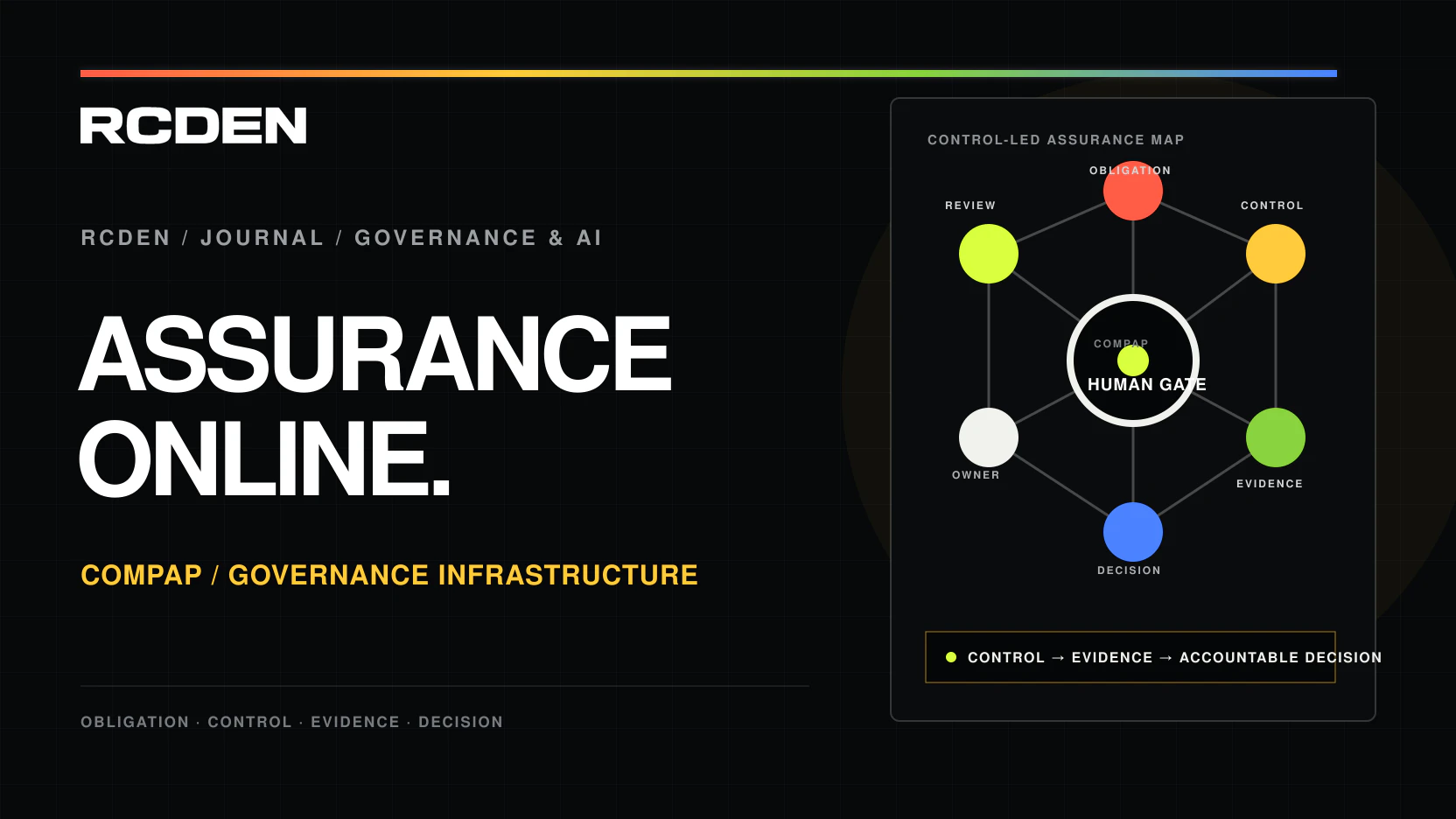
A policy proves intention. It does not prove the control is owned, working or evidenced. Effective assurance connects each obligation to a responsible person, an appropriate control and evidence that supports an accountable decision.
Policies are the start—not the operating system
Assurance should focus on meaningful controls. A control can carry an identifier, objective, target state, owner, review route and evidence reference. Completion means the evidence supports the required outcome—not simply that somebody clicked “done”.
The same discipline can be applied to areas such as export controls, cybersecurity, data protection, health and safety, environmental responsibilities, product safety, supplier assurance, contract obligations and document control. The goal is not to collapse different legal regimes into one score. It is to give each obligation a consistent operational home.
Record what must be achieved and why it applies.
Define the owner, target state and review route.
Reference the artefact and preserve its integrity.
Close, escalate or improve based on what the evidence shows.
Keep the map; control the evidence
An evidence index can identify what exists and how an authorised person can obtain it without copying every underlying file. The index itself still needs appropriate access and disclosure controls.
That separation matters in defence work. Classification, export control, customer restrictions and need-to-know rules still govern the underlying material. A convenient interface must never become a reason to move information into the wrong environment.
People-first principleCapable people become more capable with AI. AI is not the capable person—and it does not own the judgement, accountability or consequence.
AI as navigator, never authority
Where AI is appropriate, it may help a person locate relevant information or identify questions for review. Its suitability depends on the information involved, the applicable restrictions and validation of its outputs.
Responsibility remains with authorised people. An AI-generated explanation does not establish compliance or authorise disclosure, and consequential decisions require appropriate human review.
Supporting human judgement as the company grows
Clear ownership and proportionate records support continuity as a team grows. They help people find relevant evidence and understand which decisions need review.
This article explains general assurance principles at a public level. Customer requirements and internal arrangements are managed through authorised channels.
Read our public policies